Blog NLP & LLMs 4 min read
Accurate, cheap, low-carbon: 36 hours of RAG
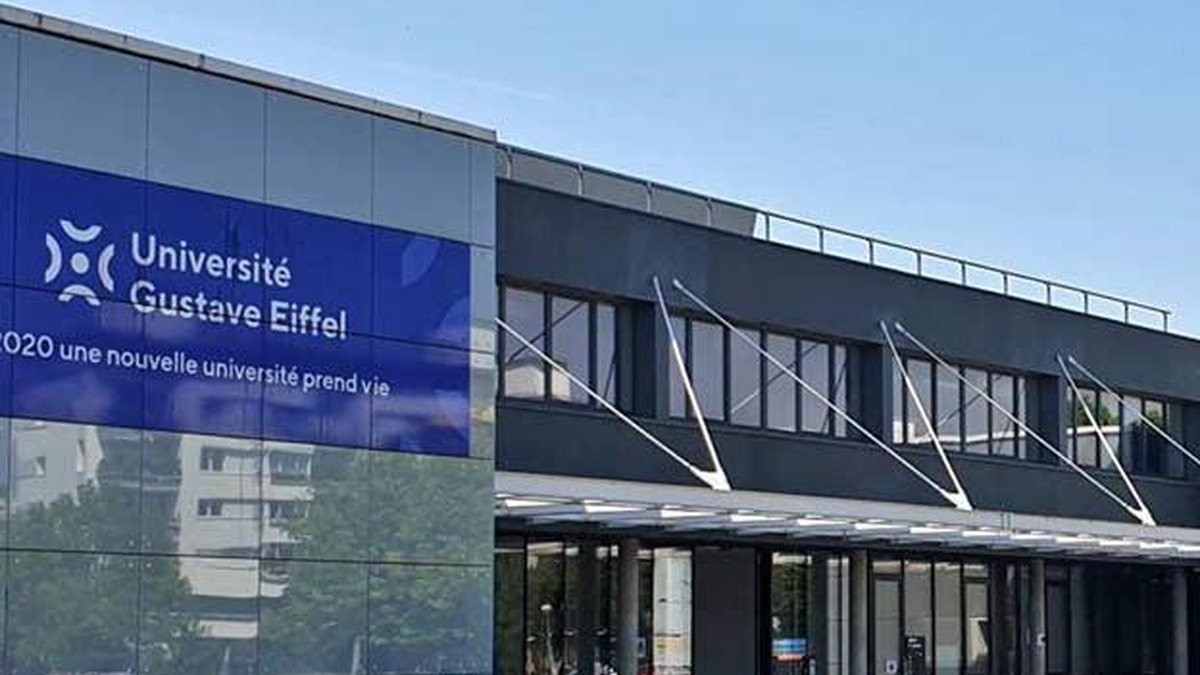
A generative AI hackathon with Milliman and Université Gustave Eiffel, where the assistant had to answer actuarial questions accurately, cheaply and with a small carbon footprint. All three at once, or it did not score.
The premise
Most student LLM projects are graded on whether they work. In production, “it works” is the entry ticket rather than the result. An assistant that answers well and costs a fortune per query is not deployable, and one that burns a large model on every trivial question is not defensible either.
So the brief for this one, run with Université Gustave Eiffel on 4 and 5 June 2026, was deliberately three-sided: accurate, cheap, low-carbon. Teams had 36 hours.
The task
Build an internal assistant that answers technical actuarial questions from a corpus of 152 published actuarial dissertations, supplied as PDFs. The corpus was deliberately spread across the profession: motor, climate, household, personal protection, reinsurance and life, with life the largest slice at a quarter of the documents.
Nothing about the answer is given. Extracting, chunking and indexing that corpus is the first half of the problem, and retrieval quality caps everything downstream. Retrieve the wrong passages and the best model in the world will still answer badly.
Each team got a pre-configured Hugging Face Space, a working RAG baseline, two
Azure-hosted models (a large one and a small one), a token budget, and a strict
API contract: POST /query, exact response format, any deviation scores zero.
The baseline was there to be improved, not rewritten.
How it was scored
A composite of three measurements, which is where the interesting behaviour came from:
- Accuracy, from 130 multiple-choice questions plus 20 open ones graded by LLM-as-judge.
- Cost, in tokens consumed.
- Carbon, the estimated CO₂ of the LLM calls.
Routing everything to the large model buys accuracy and loses on the other two. The scoring was designed so that the winning strategy is the one an engineering team would actually have to find: decide, per question, how much machine the question deserves. A partial leaderboard was published at the end of day one, a final one after the 16:00 code freeze on day two, then the jury pitches.
The teaching point
The day-one debrief is the part I would keep for any future edition, because it is the lesson that transfers beyond hackathons. The pipeline splits into two zones with completely different iteration costs.
The embedding zone covers the PDF parser, chunk size and overlap, chunking strategy and embedding model. Touch any of these and every vector has to be recomputed, which means a full re-ingestion of an hour or more. Under a 36-hour clock that is a bet, not an adjustment.
The free zone covers query rewriting and HyDE, adaptive top-K, hybrid BM25 plus dense retrieval, cross-encoder reranking, prompt engineering, and routing between the small and large models. None of it moves the vector store, so iterations take minutes.
Teams that mapped this early spent day two measuring. Teams that discovered it late spent day two re-ingesting. Knowing which knob is expensive to turn is most of what separates the two.
How it turned out
Teams from two master’s programmes at Gustave Eiffel, including the Master Proba-Stat des Nouvelles Données, spent 36 hours and several hundred lines of code on it.
- Grand prize: Groupe 814, for the most complete and original system.
- Runner-up: Échec et Maths.
- Best presentation: Datack.
That the pitch had its own prize is not decoration. A result a risk committee cannot follow is a result that does not ship, and the students who understood that were not always the ones highest on the leaderboard.
My role, and the people who ran it
Subject lead and overall point of contact. I designed the problem, the corpus and the evaluation, and mentored teams across both days. Students came from three different profiles by design, data science, actuarial science and software engineering, because no one of them covers the four axes the task needs.
None of it runs on one person. On the Milliman side: Quincy Hsieh on infrastructure, Alexandre Ren on scoring and the leaderboard, Bertille Tierny and Muhammad Umer mentoring, Chloé Rolland on organisation and communication. On the Gustave Eiffel side, the jury and teaching staff: Thierry Jeantheau, Mohamed Hebiri, Claire Lacour, Thomas Bonis, Jacques Printems and Florian Valade.
Announcements from Milliman France and the master’s programme.
The material
Everything the teams received, plus the two decks from the sessions, is on the teaching page and here. The slides are in French.
- The brief: the task, the corpus, the scoring and the rules.
- Baseline walkthrough: the RAG pipeline they started from, file by file.
- RAG crash course: retrieval-augmented generation from scratch, in one morning.
- Day 1 debrief: the map of optimisation levers described above.
Reusable for teaching. The corpus itself is not redistributable.